Digital Marketing ROI: How Service Businesses Measure Success
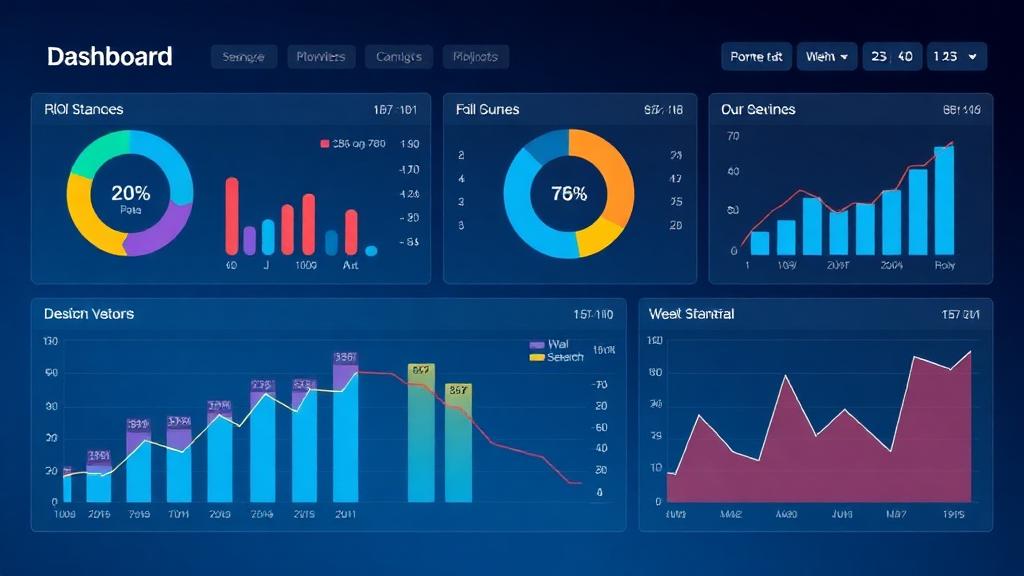
Understanding Digital Marketing ROI for Service Businesses
Measuring return on investment in digital marketing is crucial for service businesses to understand which strategies deliver the best results and optimize their marketing spend for maximum growth. Unlike product-based businesses, service companies face unique challenges in ROI measurement due to longer sales cycles and complex customer journeys.
Essential ROI Metrics
Service businesses should focus on metrics that align with their business model, including customer lifetime value (CLV), lead quality scores, conversion rates, and cost per acquisition to make informed marketing decisions.
Customer Lifetime Value (CLV)
The total revenue a customer generates over their entire relationship with your business.
Customer Acquisition Cost (CAC)
The total cost to acquire a new customer through your marketing efforts.
ROI Optimization Strategies
Implement these proven strategies to improve your digital marketing ROI and drive sustainable business growth.
1. Improve Lead Quality
- • Refine targeting parameters based on your best customers
- • Create qualifying content that pre-screens prospects
- • Implement lead scoring to prioritize high-value opportunities
2. Optimize Conversion Funnels
- • Simplify forms and reduce required fields
- • Add social proof and testimonials
- • A/B test landing pages and call-to-action elements
Advanced ROI Tracking Methodologies
Implement sophisticated tracking systems to capture the full customer journey and accurately attribute revenue to marketing efforts.
Multi-Touch Attribution Models
First-Touch Attribution
Credits the first marketing touchpoint with the entire conversion value
Last-Touch Attribution
Assigns full credit to the final interaction before conversion
Linear Attribution
Distributes credit equally across all touchpoints in the customer journey
Customer Journey Mapping
Awareness Stage
- • Social media impressions and reach
- • Blog content views and engagement
- • Display advertising exposures
- • Organic search impressions
Consideration Stage
- • Website visits and page views
- • Content downloads and email signups
- • Service page engagement time
- • Comparison shopping behavior
Decision Stage
- • Contact form submissions
- • Phone call inquiries
- • Quote requests and consultations
- • Live chat interactions
Channel-Specific ROI Analysis
Different marketing channels require unique approaches to ROI measurement and optimization strategies.
Search Engine Marketing ROI
Google Ads Metrics
- • Cost Per Click (CPC): $2-15 for service keywords
- • Conversion Rate: 2-5% typical for service inquiries
- • Cost Per Conversion: $50-300 depending on service value
- • Quality Score: Aim for 7+ to reduce costs
Content Marketing ROI
Content Performance Metrics
- • Organic traffic growth: 20-50% annually
- • Lead generation from content: 3-8 leads per post
- • Social sharing and amplification rates
- • Email list growth from content offers
Social Media Marketing ROI
Social media requires a nuanced approach to ROI measurement, balancing direct conversions with brand building and customer engagement value.
Social Media ROI Framework
Direct Conversions
- • Click-through to service pages
- • Contact form completions
- • Phone calls from social profiles
- • Event registrations and bookings
Engagement Value
- • Brand awareness and reach metrics
- • Community building and loyalty
- • Customer service interactions
- • User-generated content creation
Indirect Benefits
- • Improved local search rankings
- • Enhanced online reputation
- • Referral program amplification
- • Recruitment and team building
Email Marketing Performance
Email marketing consistently delivers the highest ROI among digital channels when properly segmented and personalized for service businesses.
Email ROI Benchmarks
Open Rate
25-35%
Service industries
Click Rate
3-8%
Quality engagement
Conversion Rate
1-5%
Email to service inquiry
Average ROI
4200%
$42 per $1 spent
Email Segmentation Strategies
Behavioral Segmentation
- • Website page visits and time spent
- • Service inquiry history and preferences
- • Email engagement patterns
- • Purchase or service completion history
Demographic Segmentation
- • Geographic location and service areas
- • Company size for B2B services
- • Industry or business type
- • Service value and complexity needs
Technology Stack for ROI Tracking
Implement comprehensive tracking tools to accurately measure and analyze your digital marketing ROI across all channels and touchpoints.
Analytics Platforms
- Google Analytics 4: Comprehensive web analytics and conversion tracking
- Google Tag Manager: Centralized tracking code management
- Facebook Pixel: Social media conversion tracking
- LinkedIn Insight Tag: B2B engagement measurement
CRM Integration
- HubSpot: All-in-one marketing and sales platform
- Salesforce: Enterprise-level customer management
- Pipedrive: Sales-focused pipeline management
- Zoho CRM: Small business comprehensive solution
Specialized Tools
- CallRail: Phone call tracking and attribution
- Hotjar: User behavior and conversion optimization
- Mixpanel: Event-based analytics and funnels
- Attribution.io: Multi-touch attribution modeling
Industry-Specific ROI Benchmarks
Service businesses span diverse industries, each with unique ROI characteristics and benchmarks. Understanding industry-specific performance standards helps set realistic expectations and identify optimization opportunities.
Professional Services ROI
Home Services ROI
Healthcare and Wellness Services
Healthcare ROI Metrics
Wellness Services
B2B Services
Advanced Attribution Modeling
Service businesses with complex sales cycles require sophisticated attribution models to accurately measure marketing impact across extended customer journeys.
Time-Decay Attribution Model
Implementation Framework
Model Structure
- • 7-day window: 40% attribution weight
- • 30-day window: 30% attribution weight
- • 60-day window: 20% attribution weight
- • 90+ day window: 10% attribution weight
Best Use Cases
- • High-value services ($5,000+)
- • Extended decision cycles (3+ months)
- • Multiple stakeholder involvement
- • B2B service providers
Data-Driven Attribution
Use machine learning algorithms to automatically determine the optimal attribution weights based on historical conversion data patterns.
Implementation Requirements
- • Minimum 600 conversions in 30 days
- • Consistent tracking across all channels
- • 90+ days of historical data
- • Google Analytics 4 or equivalent platform
- • Regular model validation and adjustment
Benefits Over Rules-Based Models
- • Adapts to actual customer behavior patterns
- • Accounts for seasonal variations
- • Identifies hidden conversion influences
- • Improves budget allocation accuracy
- • Reduces attribution bias
ROI Optimization Through Personalization
Personalized marketing experiences can increase conversion rates by 10-30% for service businesses, significantly improving overall ROI performance.
Dynamic Content Personalization
Website Personalization Strategies
Geographic Targeting
- • Location-specific service offerings
- • Local phone numbers and addresses
- • Regional pricing and promotions
- • Area-specific testimonials
Behavioral Segmentation
- • Previous page visit history
- • Time spent on service pages
- • Download and interaction patterns
- • Return visitor recognition
Referral Source Adaptation
- • Social media traffic customization
- • Search query context matching
- • Email campaign continuation
- • Partner referral acknowledgment
Email Personalization ROI Impact
Personalization Performance Metrics
Subject Line Personalization
+26%
Open rate improvement
Content Personalization
+19%
Click rate increase
Send Time Optimization
+15%
Engagement improvement
Combined Approach
+42%
Overall ROI increase
Seasonal ROI Optimization
Service businesses often experience seasonal fluctuations that require adjusted marketing strategies and budget allocation for optimal ROI throughout the year.
Industry-Specific Seasonal Patterns
High Season Industries
Tax Services (Jan-Apr)
- • 60-80% of annual revenue
- • 5x higher PPC costs
- • Maximum budget allocation
- • Aggressive competitive strategies
HVAC (Summer/Winter)
- • Emergency service premium pricing
- • Local search volume spikes
- • Maintenance scheduling emphasis
- • Weather-triggered campaigns
Counter-Seasonal Strategies
Low Season Optimization
- • Focus on content marketing and SEO
- • Build email lists for peak season
- • Develop partnership relationships
- • Create educational resources
Year-Round Services
- • Promote seasonal maintenance
- • Bundle services strategically
- • Offer planning consultations
- • Maintain consistent visibility
Advanced ROI Reporting Frameworks
Create comprehensive ROI reporting systems that provide actionable insights for strategic decision-making and ongoing optimization.
Executive Dashboard Design
Key Performance Indicators Hierarchy
Primary KPIs
- • Overall Marketing ROI
- • Revenue Attribution
- • Customer Acquisition Cost
- • Customer Lifetime Value
Secondary KPIs
- • Channel-specific ROI
- • Campaign performance
- • Conversion funnel metrics
- • Lead quality scores
Operational KPIs
- • Traffic and engagement
- • Content performance
- • Technical metrics
- • Competitive positioning
Automated Reporting Systems
Implement automated data collection and reporting to ensure consistent, accurate ROI measurement without manual overhead.
Data Integration Tools
- Google Data Studio: Free visualization and automated reporting
- Tableau: Advanced analytics and data modeling
- Microsoft Power BI: Enterprise integration capabilities
- Supermetrics: Multi-platform data connector
- Zapier: Workflow automation and data synchronization
Reporting Frequency Recommendations
- Daily: Traffic, conversions, and spend monitoring
- Weekly: Campaign performance and optimization alerts
- Monthly: Comprehensive ROI analysis and trends
- Quarterly: Strategic review and budget planning
- Annually: Full attribution model evaluation
Maximize Your Marketing Investment
Measuring digital marketing ROI isn't just about calculating numbers—it's about building a data-driven foundation that transforms your marketing from a cost center into a profit driver. The businesses that master ROI measurement consistently outperform competitors and achieve sustainable growth.
Start by implementing comprehensive tracking across all channels, establish clear attribution models, and focus on metrics that align with your business objectives. Remember that the most valuable ROI insights come from understanding the entire customer journey, not just individual touchpoints.
The frameworks, tools, and strategies outlined in this comprehensive guide provide everything you need to measure, optimize, and scale your digital marketing efforts with confidence. Your marketing investment deserves the same analytical rigor as any other business investment—make every dollar count.
Success in digital marketing ROI optimization requires patience, consistency, and a willingness to adapt based on data insights. The service businesses that commit to this disciplined approach will build sustainable competitive advantages and achieve remarkable growth in the years ahead.
Frequently Asked Questions
What's a good ROI benchmark for service business digital marketing?
How long does it take to see measurable ROI from digital marketing?
Which digital marketing channels provide the highest ROI for service businesses?
Related Articles
Digital Marketing ROI: How Service Businesses Measure Success
Complete guide to measuring and optimizing digital marketing ROI with key metrics, tools, and frameworks for service businesses.
Read MoreGoogle Ads for Service Businesses: Complete Setup Guide
Master Google Ads for service-based businesses with proven campaign setup, optimization techniques, and budget strategies.
Read MoreLocal SEO for Trade Businesses: Complete Ranking Guide
Dominate local search results with proven SEO strategies specifically designed for trade and service businesses.
Read More